
News report from Stanford University on our research: “By tapping the expertise of indigenous hunters, researchers found that conventional surveying techniques underestimate animal populations and miss species in the remote Amazon. Producing an accurate count is important for planning conservation efforts.” Continue reading “The Amazon rainforest may be home to more animals than previously thought, Stanford scientists show”
New Publication: Socio–environmental sustainability of indigenous lands: simulating coupled human–natural systems in the Amazon
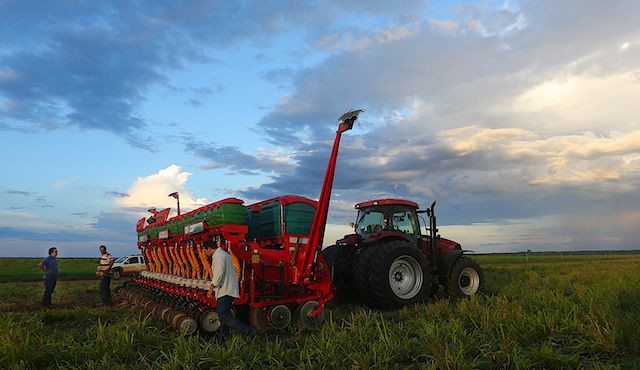
Our latest publication is out in Frontiers in Ecology and The Environment. We examine the socio-environmental sustainability of protected areas inhabited by indigenous and rural peoples and describe how socio-ecological change and development (e.g., forest clear-cutting outside indigenous areas, religious conversion, improved child mortality rates and introduction of resources from outside) outside these areas influences the sustainability of biodiversity, forest cover, and people inside. There are some surprising results so read the publication!
Read the article:
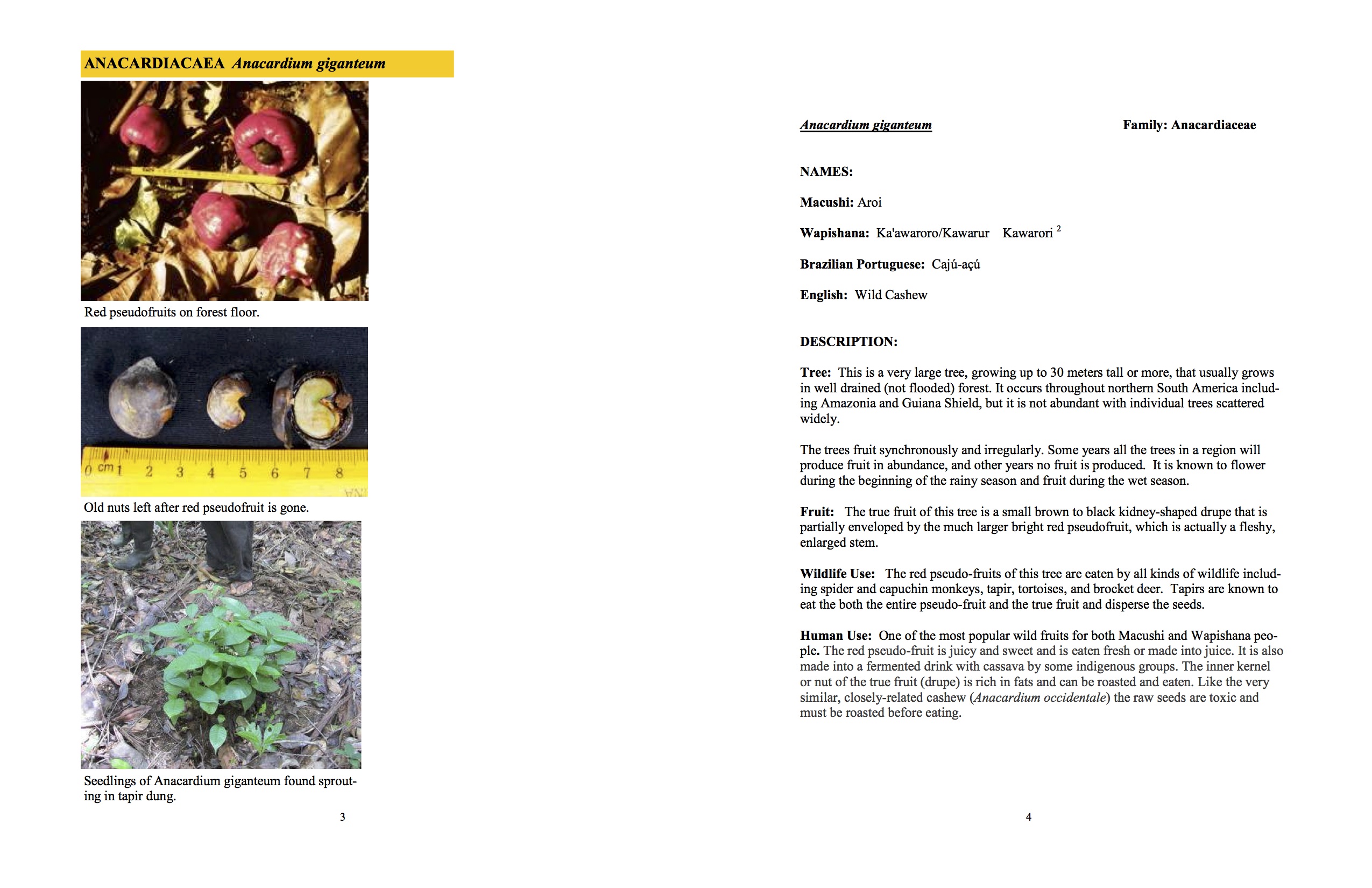
Upcoming New Book! Wild Fruits of the Guiana Shield
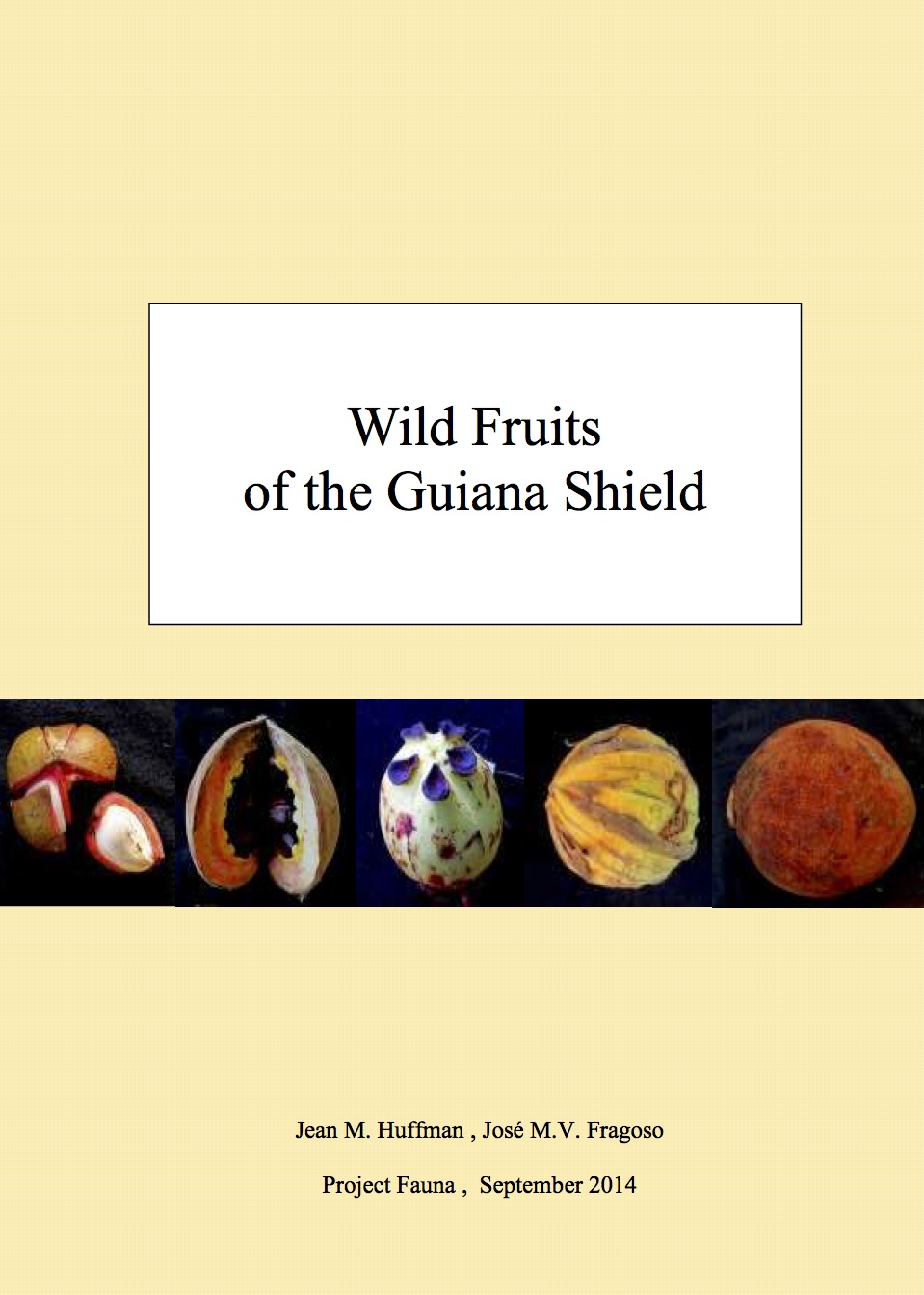
Jean Huffman and Jose Fragoso have completed a draft of their book “Wild Fruits of the Guiana Shield”. They hope to submit it for publication by spring of 2016.
Fragoso group paper accepted for publication
A manuscript by Jeff Luzar, Kirsten Silvius and José Fragoso entitled “Church Affiliation and Meat Taboos in Indigenous Communities of the Amazon”, was accepted for publication with revisions by the journal “Human Ecology” on March 19, 2012. The paper examines how meat taboos held by indigenous peoples are influenced by a number of different Christian churches.
Especialista discute monitoramento ambiental na Amazônia (José Fragoso presents at ICMBio)
Dr. José Fragoso presented results from his research integrating indigenous communities into biodiversity monitoring at the Chico Mendes Institute of Conservation and Biodiversity (ICMBio) in Brasilia, Brazil on February 10, 2012. Click here for an overview in portuguese.
 Fragoso Lab