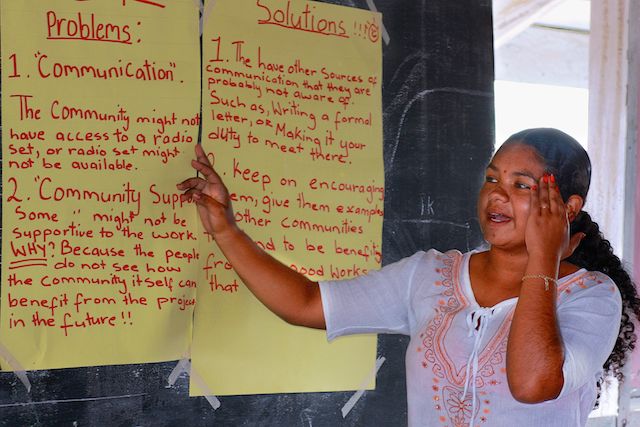
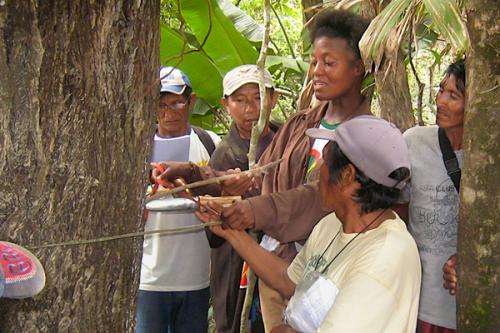
Community discussion of potential problems of environmental monitoring by villagers (photo Jose Fragoso)
Jose Fragoso lectures at Stanford’s Center for Latin American Studies (link: http://events.stanford.edu/events/482/48261/) on what leads to success and failure in environmental and social monitoring by local people.
The lecture is highly recommended for academics, researchers, professionals and students interested in the success and failure of participatory and citizen science monitoring approaches
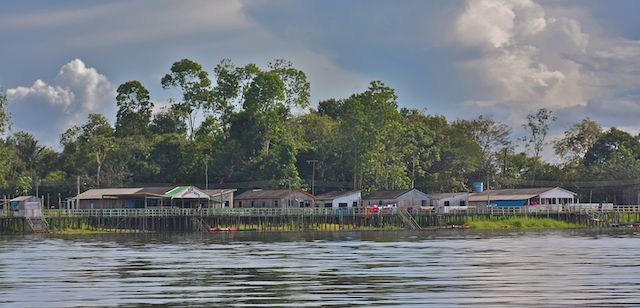
Village by an Amazonian river (photo by Jose Fragoso)
We have completed a major work describing the sustainability of hunting, farming (land use) and local livelihoods in the tropics. We devised an agent based computer simulation model and explored the relationships between the above mentioned elements to consider what the future may hold for tropical forest biota, ecosystems and peoples.
Iwamura T., Lambin E., Silvius K.M., Luzar J.B. & Fragoso J.M.V. 2014. Agent-based modeling of hunting and subsistence agriculture on indigenous lands: understanding interactions between social and ecological systems. Environmental Modelling & Software, 58: 109-127.
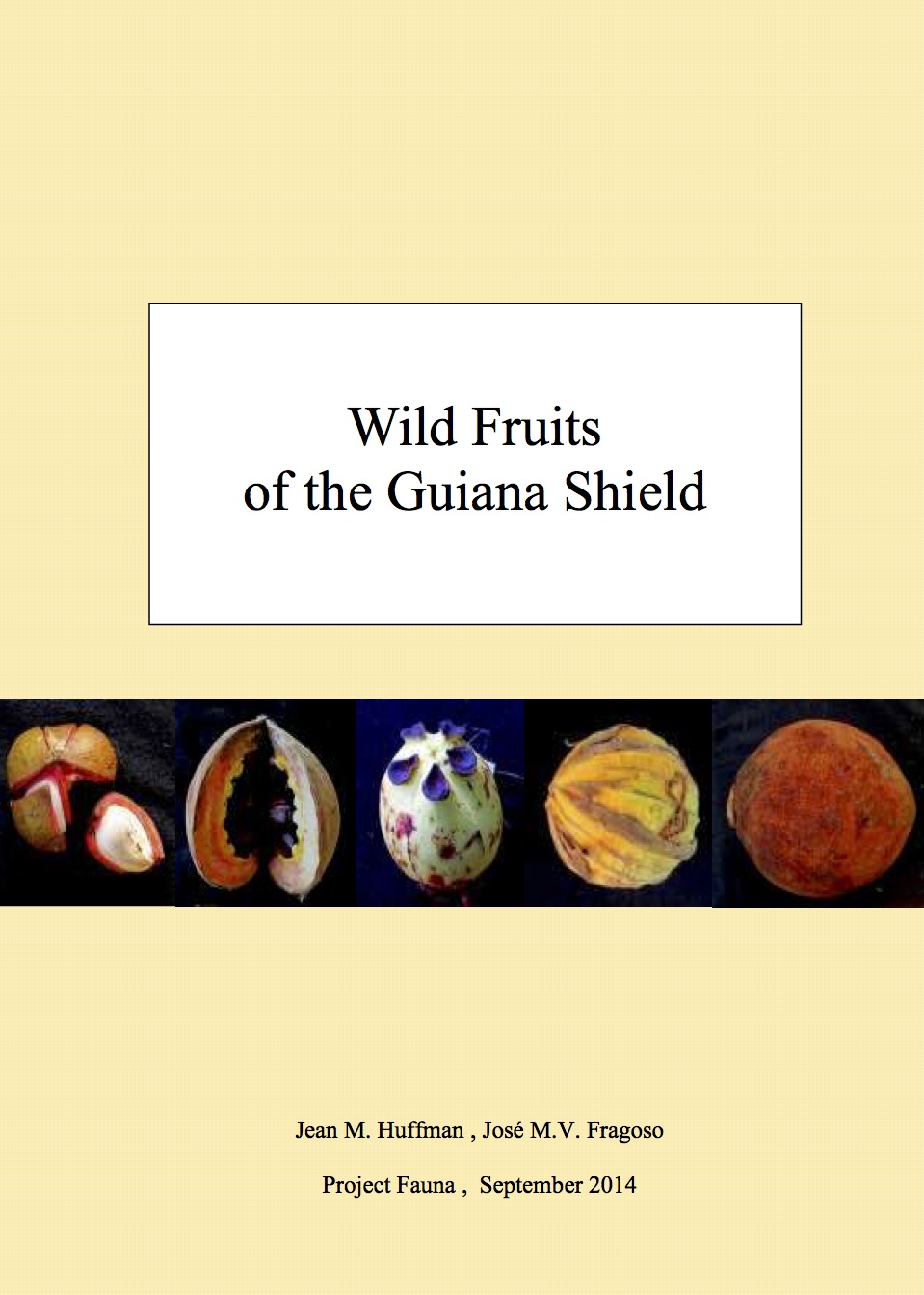
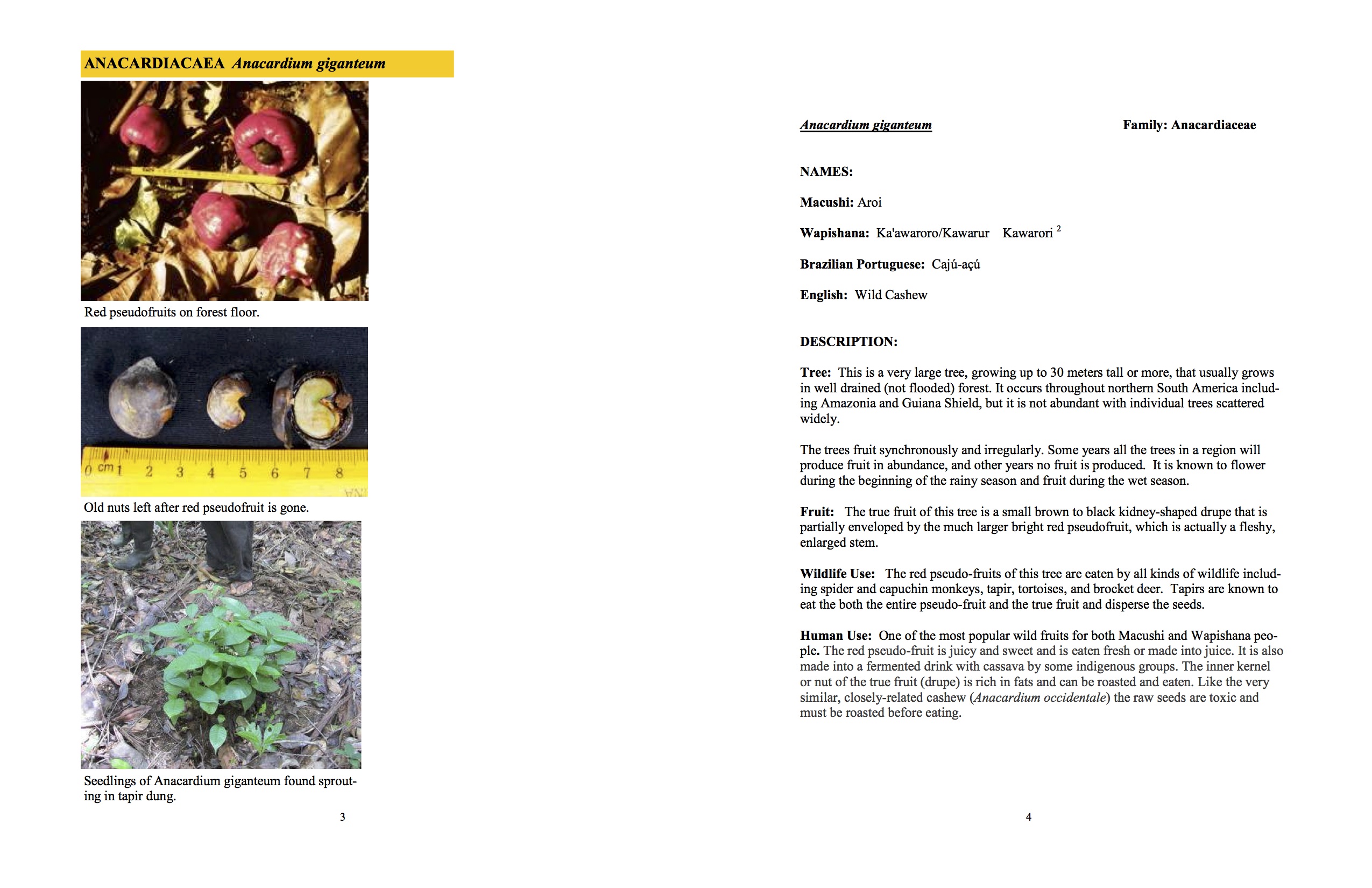
Jean Huffman and Jose Fragoso have completed a draft of their book “Wild Fruits of the Guiana Shield”. They hope to submit it for publication by spring of 2016.
Jane Read from Syracuse University and the Fragoso lab (Project Fauna) produced atlases for 23 villages of the Rupununi, Guyana. Each atlas provides a socio-economic and environmental profile of the village.
Atlases for Fairview, Wowetta, Paipong / Tiger Pond, Katoka, Kwaimatta, Tipuru, Aishalton, Achawib, Para Bara, Karaudarnau and Awarewanau can be downloaded from the North Rupununi District Development Board at: http://www.nrddb.org/projectfaunaaltlases
The US National Public Radio’s The World program reported on our return of the atlases to communities. The reporter, Elsa Yougstead actually traveled for two weeks with us through the villages. You can hear the report here:http://www.pri.org/stories/2011-08-25/slideshow-customized-atlases-amazon
Dr. Kye Epps instructs Makushi field researchers on measuring trees for carbon estimation (photo by Han Overman)
Mongabay’s Sanhya Sekar wrote two articles concerning the Fragoso Group’s work with indigenous people’s field measurements of tropical forest carbon stocks. Sekar writes “With financial incentives encouraging maintenance of carbon stocks and the increased popularity of carbon trading between countries, a forest has become economically a lot more than a clump of trees that supplements livelihoods. A forest now has an intrinsic value by just existing, a value that can be measured in economic terms.”
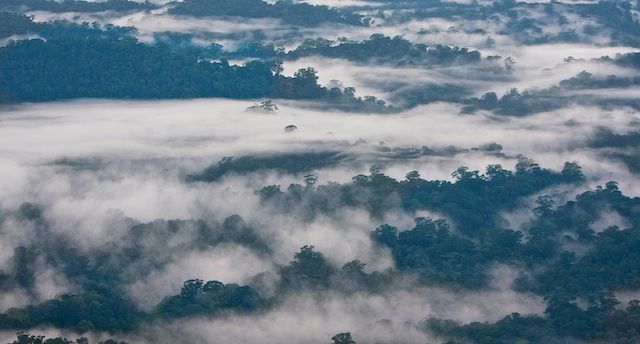
Low hanging clouds over the Amazon forest (photo Jose Fragoso)
Isabel Jubes of KZSU 90.1 FM Radio Stanford interviews Jose Fragoso concerning the State of the Amazon Forest. KZSU broadcasts Latino and Hispanic Culture to the world.
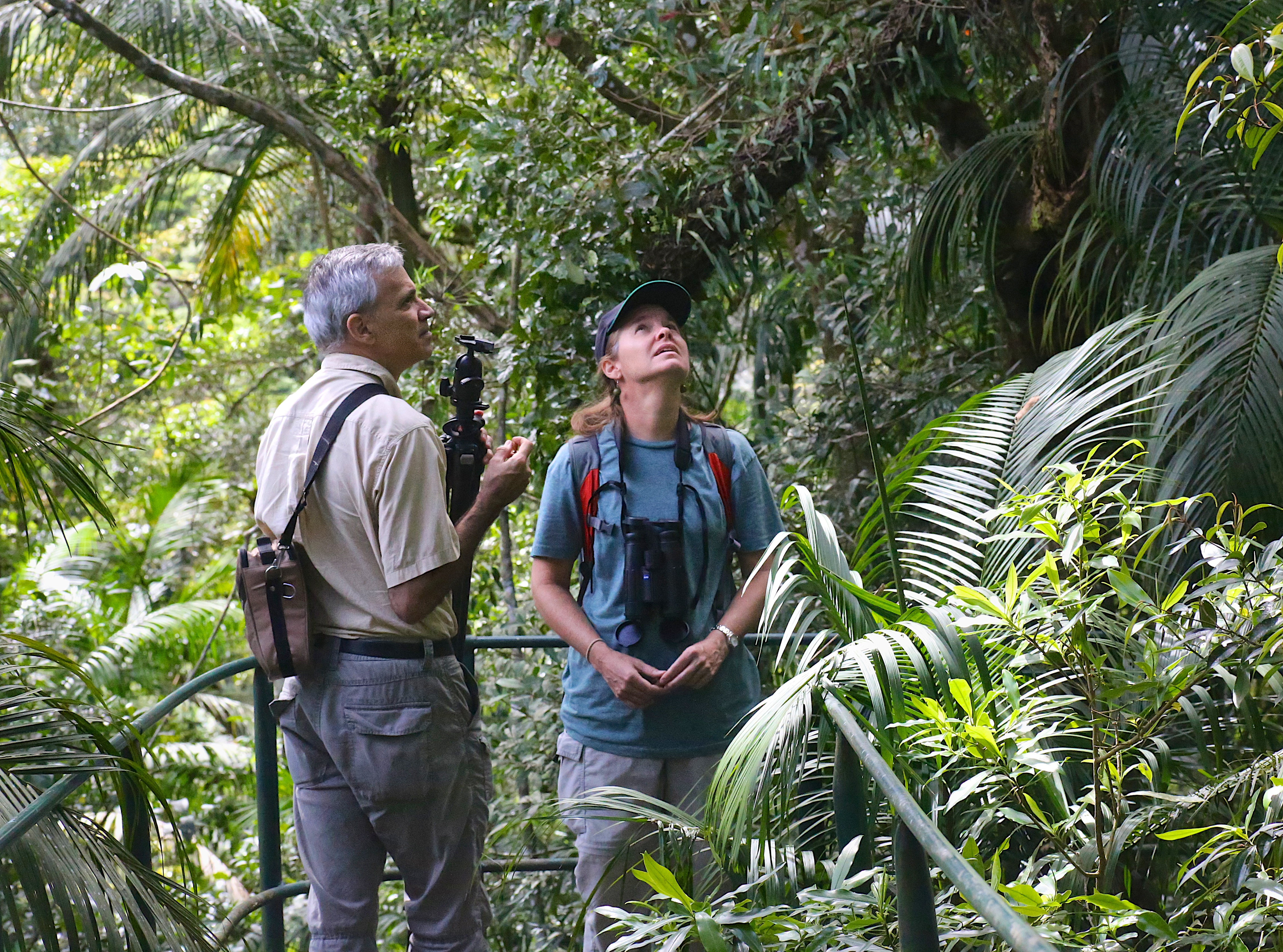
Kirsten Silvius & L. Flamarion de Oliviera (photo Jose Fragoso)
Kirsten Silvius’s, research (with our lab) highlighted on Virginia Tech University’s home page (http://www.vt.edu/) with photos by Jose Fragoso. The article describes how economists, fisheries biologists and wildlife managers are working together to set resource use policies in the Amazon.
Jose Fragoso was interviewed by National Public Radio (NPR-USA) in Hawaii concerning The Association for Tropical Biology and Conservation’s (ATBC) call for the US government to continue funding Kahoolawe, Hawaii’s biocultural restoration. The island was used by the US military for over 50 years for training exercises and as a bombing range. The island is very important to Native Hawaiians.
The Maui News, Big Island Chronicle San Francisco SFGATE and Star Advertiser newspapers all carried stories citing The Association for Tropical Biology and Conservation’s (ATBC) call for the US government to fund the biocultural restoration of Hawaii’s Kahoolawe Island. In the articles ATBC’s representative Jose Fragoso calls for the US government to complete their agreement for cleaning up the island. It was used for over 50 years for military exercises and as a bombing range.
This publication looks at how different Christian religions influence indigenous people’s belief systems concerning hunting and meat taboos in the Amazon
Luzar J.B, and Fragoso JMV. 2012. Shamanism, Christianity and Culture Change in Amazonia. Human Ecology 41:299-311.


 Fragoso Lab